

Website not ranking on Google is a common challenge for businesses that want to attract more organic traffic, generate leads, and reach potential customers online. If your website isn’t appearing in relevant search results, several factors could be affecting its visibility, including technical SEO issues, weak content, poor keyword targeting, slow loading speed, or a lack of relevant backlinks.
Many businesses invest time and money into building a website, expecting it to show up on Google and start generating traffic. The design looks professional, the pages are live, and everything seems complete. Yet months go by with little to no visibility.
This situation is more common than it should be. The issue is not simply competition or bad luck. In most cases, the website was never built with the right foundation to rank.
If your website is not ranking on Google or struggling to gain traction, there are specific reasons behind it. In this article, you will learn what is holding your website back and how to fix it with practical SEO services and a strategic plan.
Website Not Ranking on Google: The Core Problem
Your Website Structure Is Not Search-Friendly
Search engines rely on structure to understand your website. If your pages are not organized clearly, Google has difficulty identifying what your site is about.
Many websites lack a logical hierarchy. Important pages are buried, internal links are weak, and navigation does not support discoverability. This limits your chances of ranking.
You Are Targeting the Wrong Keywords
A common issue is targeting keywords that are either too broad or not aligned with user intent.
Businesses often try to rank for general terms that are highly competitive. Others create content without any keyword strategy at all. In both cases, the result is low visibility.
Without proper keyword targeting, your website is essentially invisible to the right audience.
Your Website Has Technical Issues
Technical performance plays a major role in rankings. Slow loading speeds, poor mobile responsiveness, and indexing issues can prevent your site from performing well.
Even if your content is strong, technical problems can limit your ability to rank.
Search engines prioritize websites that provide a smooth and reliable user experience.
Your Content Lacks Depth and Relevance
Content is one of the most important ranking factors. If your website has minimal or generic content, it will struggle to compete.
Search engines favor websites that provide clear, useful, and relevant information. Thin content does not build authority or trust.
Without strong content, your website has little reason to rank.
Your Website Has No Authority
Authority is built through credibility. One of the key signals is backlinks from other websites.
If your website has little to no external references, it becomes difficult to compete with more established sites.
Authority takes time to build, but without it, rankings remain limited.
Business Impact: What This Means for Your Growth
When your website does not rank, your business loses visibility. Potential customers searching for your services will not find you.
This leads to inconsistent lead generation and missed opportunities. Many businesses try to compensate by increasing their ad spend, which raises costs without solving the underlying problem.
Low rankings also affect trust. Users often associate higher search positions with credibility. Without that presence, your business may be overlooked.
Over time, this limits your ability to grow sustainably.
Solutions: How to Fix Your Website Ranking Issues
Build a Clear Website Structure
Start by organizing your website into a logical structure.
Your main services should be easy to access, supported by relevant subpages. Internal links should connect related content, helping both users and search engines navigate your site.
A strong structure improves crawlability and clarity.
Conduct Proper Keyword Research
Identify keywords that match what your target audience is searching for.
Focus on intent-based keywords rather than broad terms. These are more likely to attract users who are ready to take action.
Use these keywords to guide your content and page structure.
Improve Technical Performance
Ensure that your website loads quickly and works well on all devices.
Optimize images, remove unnecessary scripts, and fix any broken links. Make sure your pages are properly indexed and accessible to search engines.
Technical improvements create a solid foundation for SEO. For a quick performance check, review Google PageSpeed Insights.
Create High-Quality Content
Develop content that provides real value to your audience.
Your pages should answer questions, explain your services clearly, and address common concerns. Content should be detailed, relevant, and aligned with user intent.
Consistent updates help maintain relevance and improve rankings over time.
Build Website Authority
Focus on earning backlinks from credible sources.
This can include business directories, partnerships, and industry-related content. The goal is to build trust and credibility in the eyes of search engines.
Authority strengthens your ability to rank.
Align SEO with Conversions
Ranking alone is not enough. Your website must also convert visitors into leads.
Ensure that your design, messaging, and user experience guide users toward taking action. This includes clear calls to action and a structured user journey.
When SEO and conversion strategy work together, results become measurable.
Strategic Insight: A Realistic Scenario
Consider a business that launched a new website but saw no improvement in traffic.
After reviewing the site, several issues were identified. The structure was unclear, keywords were not properly targeted, and the content lacked depth.
The business implemented a structured SEO strategy. Pages were reorganized, content was improved, and technical issues were resolved.
Within a few months, the website began to rank for relevant searches. Traffic increased, and inquiries followed.
The improvement came from addressing multiple factors together, not from a single change.
FAQ
How long does it take to rank on Google?
It usually takes several months to see consistent results. The timeline depends on competition, website quality, and ongoing optimization.
Can a new website rank quickly?
New websites can gain visibility over time, but strong rankings typically require consistent effort and optimization.
Do I need SEO if I run paid ads?
Yes, SEO provides long-term visibility and reduces reliance on paid advertising. Both should work together.
What is the most common SEO mistake?
The most common mistake is building a website without a clear SEO strategy. This leads to poor structure, weak content, and low visibility.
How do I know if my website has technical issues?
Signs include slow loading speed, poor mobile experience, and pages not appearing on Google. These issues can be identified through audits.
Can I fix SEO without redesigning my website?
Some issues can be fixed without a redesign, but major structural problems may require rebuilding parts of the site.
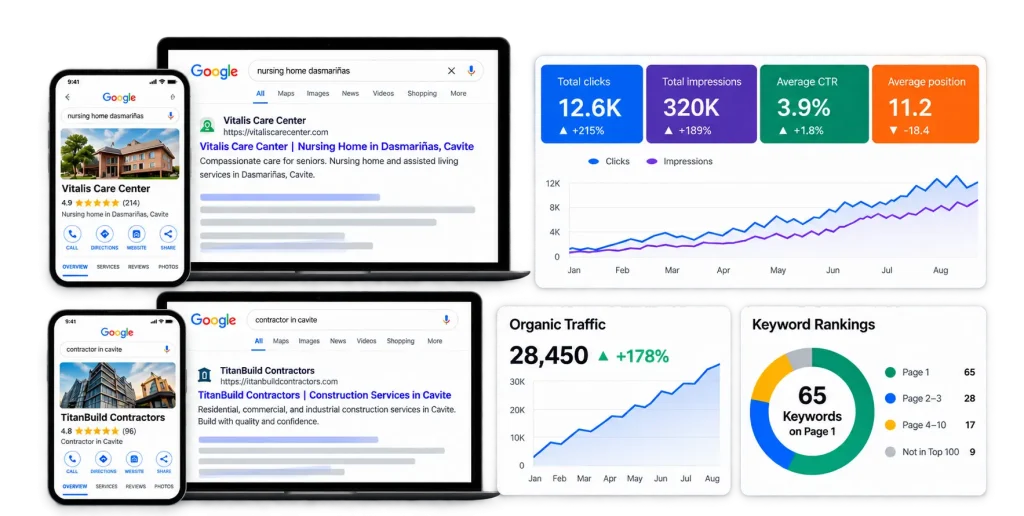
If your website is not ranking on Google, it is not due to a single issue. It is the result of gaps in structure, content, technical performance, and authority.
Fixing these issues requires a strategic approach that aligns website design, development, and SEO.
When these elements work together, your website becomes more than just an online presence. It becomes a reliable source of traffic and a consistent driver of leads.
The goal is not just to rank higher, but to build a system that turns visibility into real business results.